Balance test
With the door closed, pull the opener release cord. Lift the door halfway by hand and let go. A balanced door barely moves. If it drops or rises, the spring tension needs adjusting by a technician.
Look and listen
Run the door and watch it. It should move smoothly and evenly. Note any point where it catches, shudders, or makes a new noise — that location usually points straight at the worn part.
Hardware
Everything on a garage door is under vibration every cycle.
- Tighten hinge screws, bracket bolts and track fasteners
- Check rollers for cracks, wobble and bearings that no longer spin
- Look for fraying on both lift cables, especially near the bottom brackets
- Never loosen the bottom bracket bolts — they are under cable tension
Lubrication
Use a garage-door silicone or lithium spray on hinges, roller bearings, springs and the opener rail. Keep it off the track: the track should be clean and dry. Do not use WD-40 as a lubricant — it is a solvent.
Safety tests
Two tests, both quick, both important.
- Contact reverse: place a 2x4 flat on the floor in the door's path; the door should reverse on contact
- Sensor reverse: wave an object through the photo-eye beam while closing; the door should stop and reverse
Seals and weatherstripping
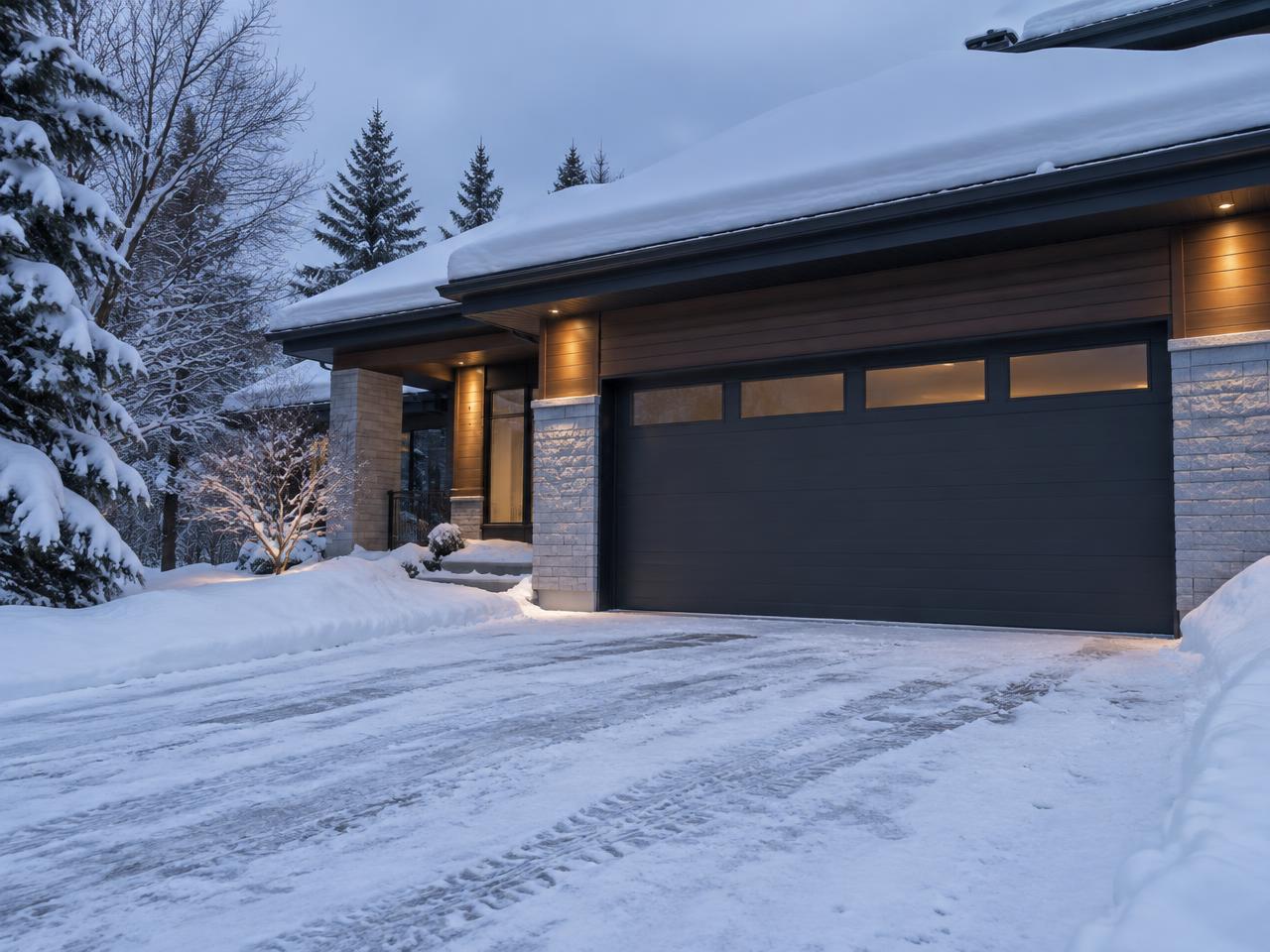
Check the bottom seal for cracks and hardening, and the perimeter stop for gaps. In this climate seals are what keep snow, meltwater and drafts out, and a hardened seal is what freezes to the slab.
Leave these to a technician
Spring tension, cable replacement, bottom bracket work and anything involving a door that is off its track. Those are the tasks where the stored energy in the system causes injuries.