1. Power and controls
Confirm the outlet is live and the breaker has not tripped. If the wall console works and remotes do not, the problem is in the remotes or the receiver, not in the opener's drive.
2. Safety sensors
Both photo-eyes should show a steady indicator light. A blinking light means misalignment, a blocked beam, or a damaged wire. Wipe the lenses, clear anything stored in front of them, and check that neither bracket has been knocked.
3. Remotes and keypads
Replace the battery before anything else. Short range is often caused by a weak battery, a damaged antenna wire hanging from the opener head, or interference from an LED bulb in the opener's own light socket.
4. Travel limits
If the door stops short of the floor or the ceiling, the limit settings have drifted. Every opener has adjustment screws or buttons for this; the manual specifies which direction increases travel.
5. Force settings
If the door reverses on contact with the floor or stops mid-travel, force may be set too low — or the door may be genuinely hard to move. Never raise force to overcome a heavy door: fix the door's balance instead.
6. The drive itself
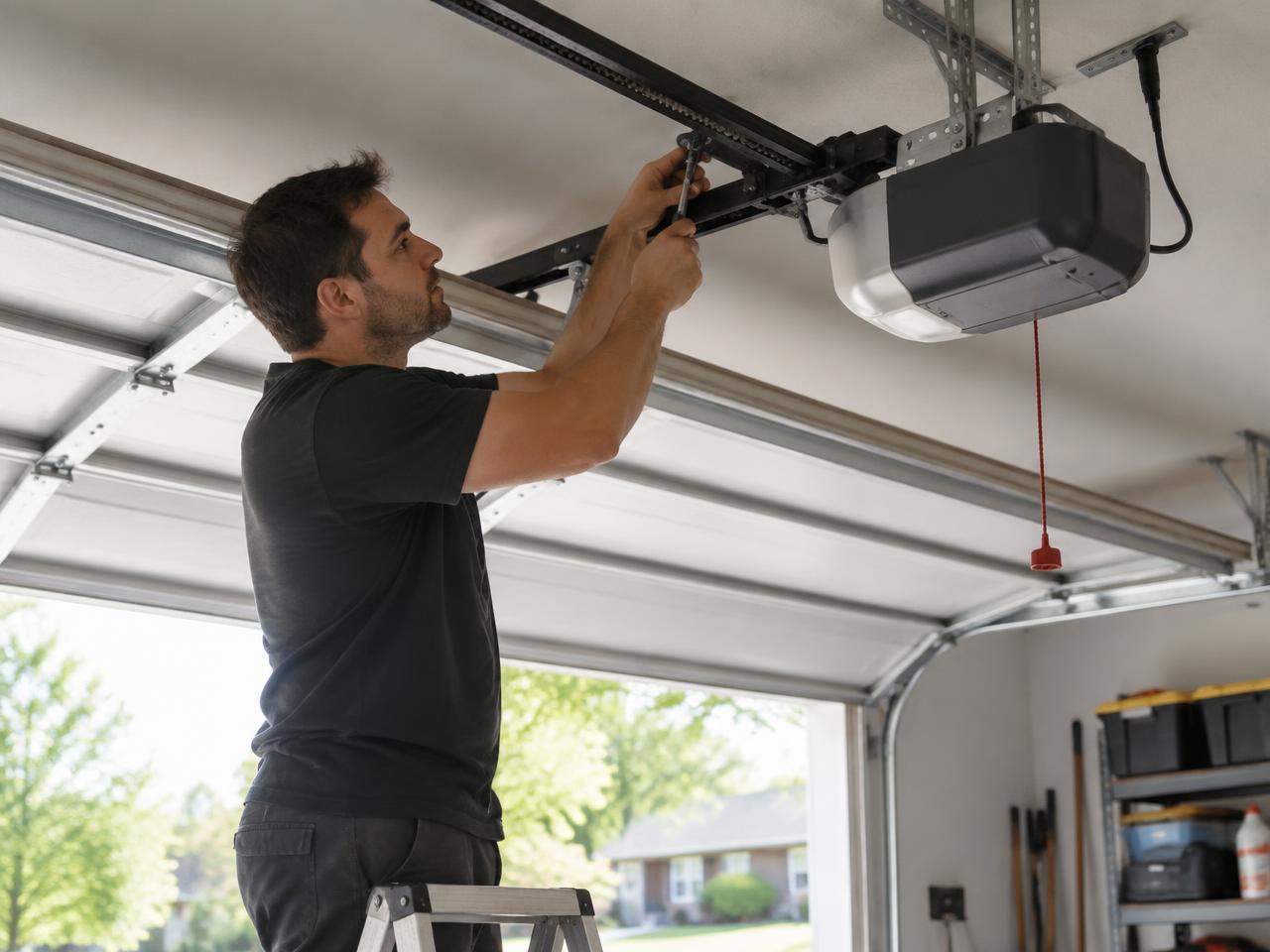
A motor that runs with no door movement means a stripped drive gear or a disengaged trolley. Grinding from the opener head is usually the nylon gear. This is a service item, not an adjustment.
When to replace rather than repair
Replace when the unit has no photo-eye safety sensors, when it is underpowered for a heavier new door, or when a logic board on an old unit costs a meaningful fraction of a new opener.