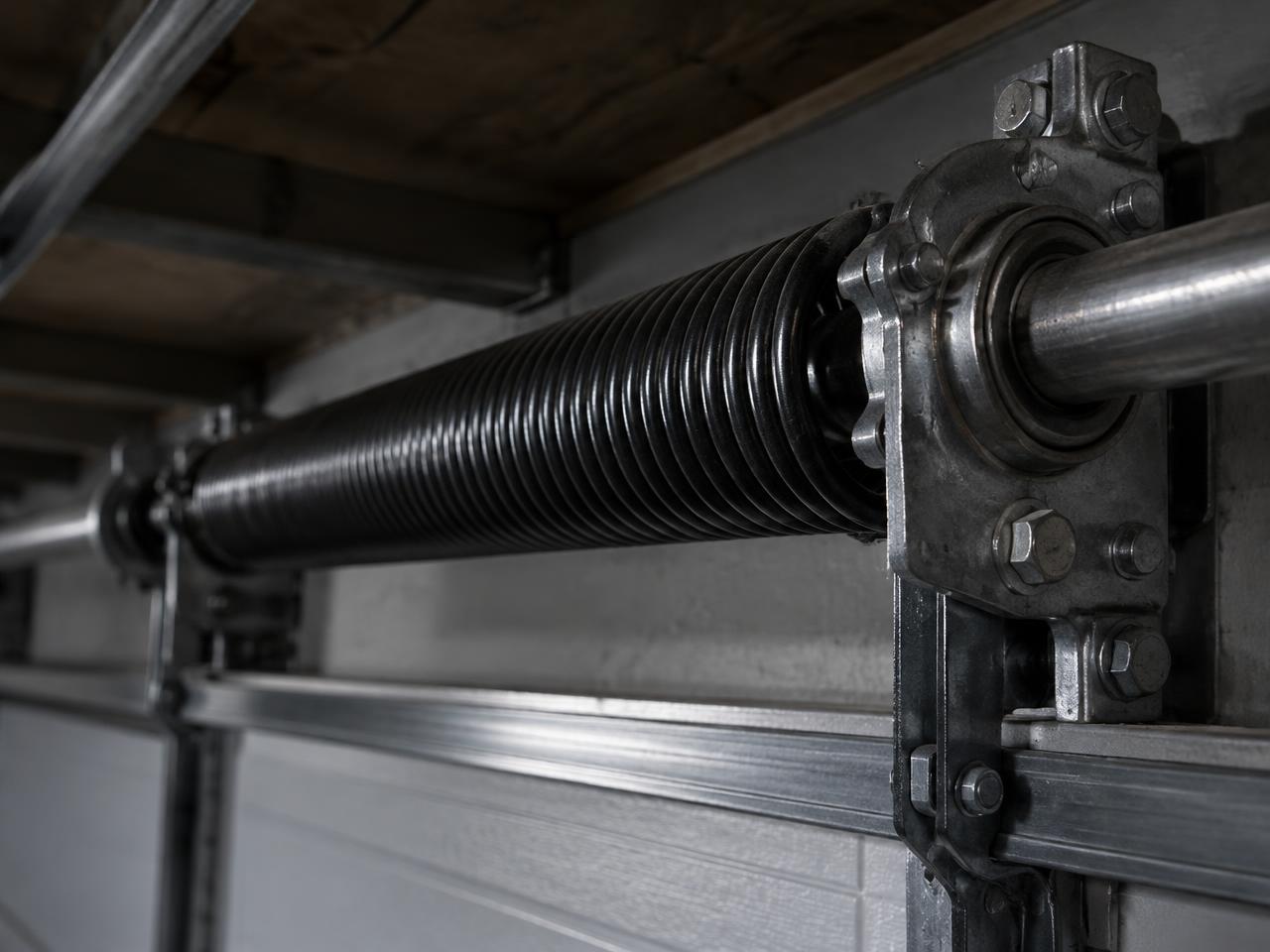
Springs are rated in cycles
One cycle is one open and one close. A standard spring is typically rated around 10,000 cycles. A household that opens the door four times a day uses about 1,500 cycles a year, so seven years is a realistic life. Two cars and a teenager can halve that.
Corrosion shortens the count
Rust creates surface pits, and pits concentrate stress. In damp or salt-exposed garages a spring can fail well before its rated cycle count. This is why keeping road salt and standing meltwater away from the door matters more here than in drier climates.
Cold reveals a spring that was already due
Cold steel is less forgiving, so a spring near the end of its life is most likely to break on a January morning. The cold does not wear the spring out — it simply chooses the moment.
Poor sizing wears springs out early
If a heavier insulated door was installed on the previous door's springs, the springs are over-stressed on every cycle. This is one of the most common causes of premature failure we see.
How to get more life from the next set
Three things help.
- Specify high-cycle springs if the door is used many times a day
- Have the springs sized to the actual door weight, not a generic assumption
- Keep them lightly lubricated and keep meltwater and salt away from the bottom of the door
Never wind a torsion spring yourself
A wound torsion spring stores a large amount of energy. Winding bars, correct technique and knowing the right turn count are what keep the job safe. It is the single most dangerous task on a garage door.